
Therapeutic massage
Menopause and massage: why touch is your body's best ally during transition

By Morgane
· 5 min read
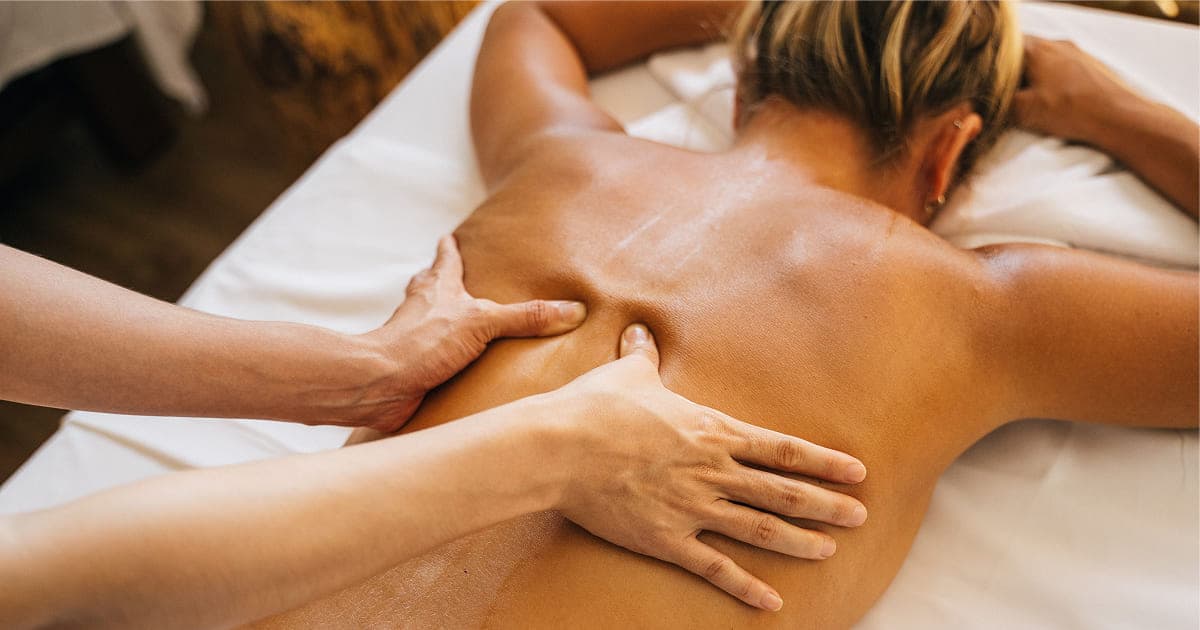
Menopause is often summed up as the end of periods and the famous hot flashes. In reality, it's a hormonal earthquake. Overnight, the body drastically reduces its production of estrogen and progesterone. Since these hormones dictated the rhythm of our mood, our temperature, and our flexibility, the entire organism has to relearn to function differently.
In this phase of great upheaval, massage is not a simple luxury to treat yourself. It's a powerful tool to help the body navigate the storm gently.
1. When the body loses its bearings
The drop in hormones triggers a chain reaction that many women experience daily:
- The internal thermostat goes haywire: Hot flashes and night sweats appear, ruining sleep.
- Stress skyrockets: You feel more irritable, more vulnerable, with the sense of struggling to handle everyday frustrations.
- Muscles and joints seize up: The body becomes stiffer upon waking, tension accumulates in the back and shoulders, creating an overall sensation of a "rusty body".

2. Massage, a "pause" button for the nervous system
Our body has two operating modes: the "action/stress" mode (which keeps us on alert) and the "rest/recovery" mode (which repairs the organism). During menopause, because of hormonal ups and downs, the stress mode is often activated constantly.
Massage comes in to press the "rest" button. By stroking and kneading the skin in a fluid, rhythmic way, the practitioner sends an absolute safety signal to the brain. Immediately, the body's chemistry changes:
- Tension decreases: The level of the stress hormone (cortisol) drops gently.
- Well-being returns: The body releases positive hormones (such as serotonin and oxytocin) that bring deep comfort and stabilize mood.
The result? You leave the massage table with a calmer mind, clearer thoughts, and often the promise of a truly restful night's sleep.
3. Restoring flexibility to a "blocked" body
Physically, massage does wonders where menopause tends to stiffen the tissues.
Under our skin, we have membranes (the fascia) that wrap around all our muscles. With the drop in estrogen, these membranes tend to dry out, lose their elasticity, and "stick together", creating diffuse stiffness and a sense of discomfort.
Through targeted kneading and pressure movements, massage stretches, relaxes, and softens these muscle fibers and tissues. It's the equivalent of a good dose of lubricant on stuck gears: the body regains its range of motion, freedom of movement, and lightness.
4. Relieving pain without medication
Many women complain of aches all over: upon waking, in the knees, lower back, or neck. Sometimes the nervous system simply becomes "hypersensitive" due to accumulated fatigue and lack of sleep.
Massage works a little trick on our brain to cut off these pain signals. It's the principle of distraction: the sensations of softness, friction, and warmth from massage travel much faster along our nerves than pain messages. In short, massage takes up all the space on the neural information highway. The brain, too busy processing this immediate sense of well-being, pushes the pain aside.
5. Making peace with a changing body
Menopause can also be a challenging milestone for morale and self-image. The body changes shape, the skin evolves... You sometimes feel like these transformations are happening to you, even that you no longer recognize your own body.
A massage session offers a caring and safe space, completely outside of
time. On the table, there are no beauty standards, no judgment, no performance
expectations. You are simply there to feel. This allows you to reconnect
positively with your sensations, to redefine your boundaries, and little by
little to make peace with this body in transition.
A few precautions to keep in mind
Although massage is a gentle and natural method, care is needed. If you suffer from osteoporosis (a common bone fragility after menopause), you must mention it before the session so that the practitioner avoids excessive pressure, percussion, or spinal twisting.
Finally, think of massage as a supportive ritual. It works even better when it is part of a gentle lifestyle routine: a regular walk outdoors, good hydration after the session, and of course, regular follow-up with your doctor or gynecologist.
Massage won't bring your hormones back, but it will greatly help your body live better without them. By taking care of your nerves and muscles, it helps you move through this phase not as an uncomfortable inevitability, but as a new chapter of your life as a woman, approached with gentleness and serenity. If you'd like to experience this moment of care, you can book a therapeutic massage session at the Pilates Tamarin studio.
Want to join Pilates Tamarin?
Small group classes · Personalized therapeutic approach · Intimate studio in Tamarin
Book a session →Written by
Morgane
State-certified physiotherapist in France, certified Pilates instructor and founder of Studio Pilates Tamarin. Passionate about conscious movement and women's well-being, Morgane has been supporting her students with a gentle therapeutic approach for over 8 years. She lives and teaches in Tamarin, in the heart of Mauritius.
5.0 · 33 reviews