
Pilates
What is Pilates and who is it for?
By Morgane
· 6 min read
Pilates is a complete system of physical and mental conditioning that brings the body and mind into harmony.
The origins: from rehabilitating soldiers to the art of movement
Pilates is a gentle form of strength training that adapts to every body, at every stage of life. The method was originally created by Joseph Pilates. First developed to rehabilitate soldiers wounded during the First World War, he later refined it to improve the flexibility and muscle tone of dancers without injuring them. Today, this set of exercises fits perfectly with current scientific and sports recommendations.
There are two techniques of Pilates:
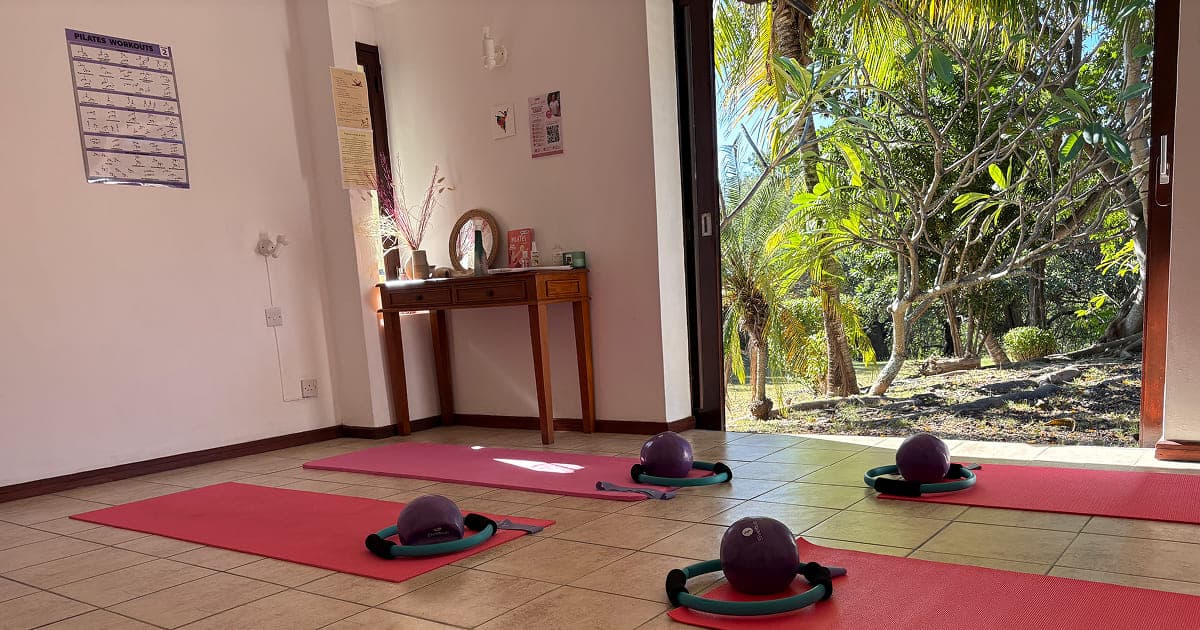
- Mat Pilates: the practice on a mat, often enhanced with small equipment.
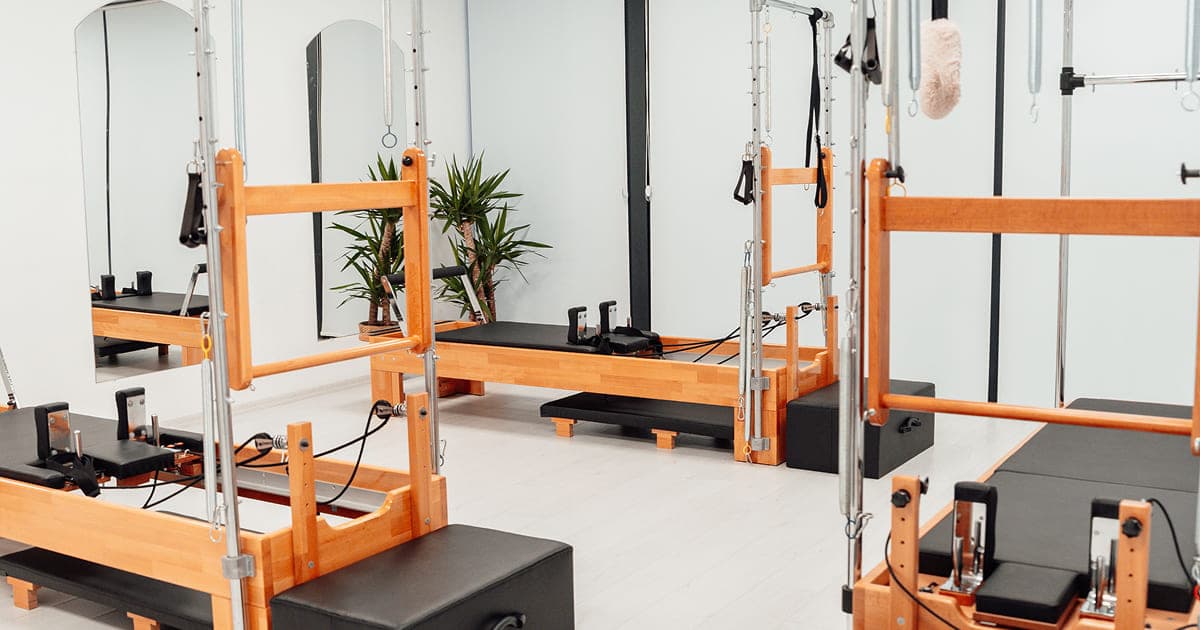
- Machine Pilates: using specific apparatus fitted with springs and pulleys (the Reformer being the best known, but you also find the Chair, the Cadillac, and so on).
The 6 founding principles of Pilates
Unlike classic strength-training methods that often target muscles in an isolated, superficial way, Pilates works the body as a unified whole, resting on six unshakeable principles:
1. Centring (engaging the "Core" or "Powerhouse")
This is the absolute starting point of every movement. In Pilates, strength travels from the inside out. Before moving an arm or a leg, you engage the body's "power centre". This solid core includes the deep abdominals (the transverse muscle), the pelvic floor (the perineum), the stabilising muscles of the lower back and the glutes. Engaging the Core correctly protects the perineum and secures the spine during every effort.
2. Concentration
Pilates rules out any mechanical or automatic movement. The mind must be fully connected to the area being worked. You visualise the muscle, feel the alignment and control every millimetre of the gesture. This complete focus creates a mind-body connection, which makes it an excellent tool to clear your head and release the stress of the day.
3. Control
Every exercise must be performed with absolute mastery. You never give in to gravity, you never rely on momentum or speed, and you control the phase where the muscle contracts just as much as the one where it lengthens. It is this strict control that guarantees full safety for the joints and tendons.
4. Breathing
Pilates breathing is very specific: it is lateral thoracic (you inhale through the nose, opening the rib cage like an accordion, without pushing the belly out). This keeps the belly drawn in and the Core engaged even on the inhale. The exhale is done deeply through the open mouth, engaging the perineum and then drawing the navel towards the spine (from bottom to top). It sets the rhythm of the movement and helps release unwanted tension (especially in the neck and shoulders).
5. Precision
In Pilates, quality comes before quantity. A pelvis placed a few centimetres off, or an incorrect alignment, completely changes the targeted muscle. You look for perfect skeletal accuracy to correct the poor postures built up in daily life (screens, driving, asymmetric positions).
6. Flow
Although the movements are slow and extremely controlled, they must never be jerky, rigid or frozen. The exercises link one after another with grace and harmony, like a continuous choreography. The movement has a rhythm, a beginning, a middle and an end.
Who is it for?
Because it is a no-impact activity, with little load, that does not stimulate the cardiovascular system in a heavy or prolonged way, Pilates is useful for anyone with the physical ability to settle onto a mat or a machine. Thanks to its adaptability, it works wonders for very specific profiles:
Women before and after childbirth
Pilates is ideal for supporting the changes the body goes through during motherhood. Before birth, it helps maintain good posture, strengthen the back to carry the baby's weight and learn to release the pelvis. After birth, it allows a gentle, gradual and ultra-safe rehabilitation of the perineum and the transverse muscle, without ever creating harmful pressure on the organs.
Returning to sport after an injury
After suffering serious injuries (bad sprains, tears, herniated discs), Pilates stands out as the perfect transition tool before going back to an intensive sport. Its lack of impact and the strict control of movement make it possible to strengthen the neglected deep stabilising muscles, correct the muscle compensations born from pain and restore mobility to the joints in complete safety.
Rebuilding after illness or heavy treatment
For people coming out of major surgery or gruelling treatments such as chemotherapy, Pilates offers a caring reconnection with their own body map. It helps them relearn how to inhabit and use their body gently, fight the chronic fatigue linked to illness, restore self-esteem and rebuild muscle strength at their own pace.
Seniors
For older people, Pilates is a precious ally to preserve independence and age well. It works balance effectively (essential to prevent falls), along with flexibility and overall posture. By strengthening the postural muscles, it also helps prevent and ease the build-up of chronic joint pain such as osteoarthritis or back pain.
Anyone who wants to take care of their health
From the sedentary person who simply wants to get moving again to the top-level athlete looking to optimise performance and prevent injury, Pilates is truly for everyone.
Equipment and learning the method
Using the equipment
- Small equipment: we regularly use accessories such as the large ball (Swiss ball), the small ball, resistance bands, Pilates circles (magic circle), yoga blocks and sometimes light dumbbells. They serve either to make a movement easier by guiding the body, or to add instability to make the exercise harder.
- The machines: for practice on apparatus, it is essential to always start in a small group (private or semi-private lessons). It is the only way to learn how to use your body correctly, master the machine's settings, engage your Core properly and develop the focus needed without risking injury.
Getting started with Pilates at the Tamarin studio
Pilates adapts to almost every body and every age. The hardest part is often simply getting started. At the Tamarin studio, Morgane guides beginners in private or small-group lessons, giving them time to find the right support and learn to engage the Core without hurting themselves. If you would like to try, you can book a first session online.
Want to join Pilates Tamarin?
Small group classes · Personalized therapeutic approach · Intimate studio in Tamarin
Book a session →Written by
Morgane
State-certified physiotherapist in France, certified Pilates instructor and founder of Studio Pilates Tamarin. Passionate about conscious movement and women's well-being, Morgane has been supporting her students with a gentle therapeutic approach for over 8 years. She lives and teaches in Tamarin, in the heart of Mauritius.
5.0 · 33 reviews