
Menopause
Menopause and weight gain: staying in shape without dieting

By Morgane
· 7 min read
For years, in my physiotherapy practice in France, I saw active, exhausted women come through the door and they all told me the same thing: "I don't understand. I eat the same as before, I'm careful... and yet my belly is rounding out, my thighs are changing and I'm worn out by the slightest session." Today, at the Tamarin studio, I hear exactly the same sentences, from women who come in from Rivière Noire, La Preneuse or Flic en Flac.
If that rings true for you, one thing is certain: you are neither lazy nor guilty. The hormonal transition of your forties and fifties is not a lack of willpower, it is a major biological reorganisation.
Trying to fight this with the weapons of your twenties (drastic low-calorie diets, hours of cardio) is the surest way to exhaust your body, break down your muscle mass and trigger a rebound effect.
As a state-qualified physiotherapist trained in France, my aim is not to sell you a dream but to explain the mechanics of your body again, so you can move intelligently, feed your muscles and go through this stage in good shape.
1. What is really happening in your body?
To act effectively, you need to understand the terrain. Weight gain at menopause comes from a threefold transformation:
- Fat redistribution: The drop in estrogen changes the way your body stores fat. It moves from storage on the lower body (hips, thighs) to more abdominal storage (visceral fat).
- The sarcopenia trap: From the age of 40, the body naturally loses muscle mass if nothing stimulates it. And muscle is your engine: it is what burns your calories, even at rest. Less muscle = a slower metabolism.
- Insulin sensitivity and stress: The hormonal decline makes cells less sensitive to insulin (which encourages storage) and the body more vulnerable to cortisol (the stress hormone, which loves to store fat on the belly).
2. Why restrictive diets are your worst enemies
When the number on the scale goes up, the reflex is often to cut back on the plate. That is the worst mistake at this stage of life.
A drastic diet sends an alarm signal to your body. To survive, it will not burn your fat as a priority: it will draw on your muscle mass and weaken your bone structure, which only brings your metabolism down further. Deprivation also pushes cortisol up, which blocks weight loss.
The golden rule: stop trying to eat "less" and aim to eat better, look to feed your muscles and your bone density.
3. Nutrition: the logic of nutritional density
No weighing food to the gram, just common sense:
- Increase your protein: Eggs, fish, white meat, pulses, tofu, skyr. With age, protein is absorbed less well: aim for a protein portion at every meal to protect your muscles and stay satiated.
- Load up on fibre: Vegetables, fruit, seeds. They look after your microbiome (heavily affected by menopause) and smooth out blood sugar spikes.
- Keep the good fats: Olive oil, nuts, oily fish provide the building blocks of your hormones and fight inflammation.

4. The physio approach: redirect your physical effort
My advice is simple: stop using exercise to "burn fat" and use it to send a building signal to your body.
Priority no. 1: strength training
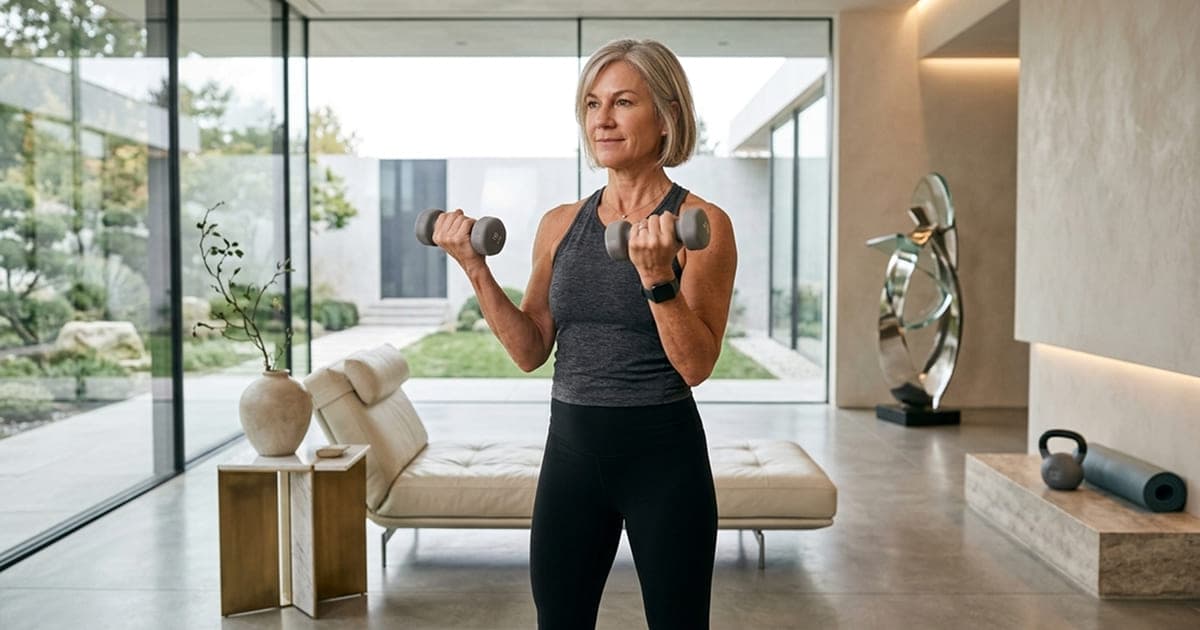
This is your best metabolic lever. There is no need to lift tonnes or chase an athlete's performance for it to work. Start simply with your own body weight to master the movements without hurting yourself, then progress at your own pace, with resistance bands or light dumbbells.
- How? Focus on compound movements: squats, lunges, pushing, pulling.
- How often? 2 to 3 sessions of 30 to 45 minutes a week are plenty if the intensity suits you.
Pilates during menopause follows the same logic: strength without impact, with the precision that protects the joints and the pelvic floor.
Priority no. 2: everyday movement
NEAT (Non-Exercise Activity Thermogenesis) is the energy your body spends on all the daily activities that are neither exercise, nor sleep, nor eating.
It is not your hour of exercise that does everything, it is what you do with the other 23 hours. Walking 7000 steps a day, taking the stairs, gardening... This non-sporting activity keeps your metabolism active without creating nervous fatigue. A 15-minute walk after a meal is also excellent for regulating blood sugar. Here, from January to March, the heat and humidity make a midday walk hard going: aiming for early morning or late afternoon, along Tamarin bay or towards La Preneuse, changes everything when it comes to consistency.
Careful with too much cardio
If running does you good mentally, keep it. But hours of intense cardio on a tired body will only push your cortisol up and weaken your joints. Put strength first, gentle cardio (brisk walking, cycling, swimming) second.
That is the logic I built into the cure Équilibre et Vitalité, a 21-day programme designed at the Tamarin studio: filmed, progressive sessions to follow from home, made for a body going through perimenopause and not for a performance to chase.
5. Hormone therapy (HRT): clearing its name to move forward
Watching the work of doctors committed to women's health, it seems essential to me to talk about menopausal hormone therapy (HRT) without taboo.
For twenty years, following studies that were badly interpreted in the 2000s, HRT was unfairly demonised, leaving thousands of women to suffer in silence. Today the international scientific community agrees that for the majority of women, when it is correctly dosed and prescribed, HRT offers a very favourable benefit/risk ratio.
A word of caution: HRT is not a "magic weight-loss pill". What it does is give the body back the biological ground it needs to move forward:
- It slows muscle loss and the redistribution of fat onto the belly.
- It protects the bones and joints, easing those diffuse aches that so often stop you from moving.
- It restores sleep by reducing or even removing hot flashes and night sweats. And a body that sleeps well is a body that regulates its appetite and energy better.
Turning to HRT is not an admission of weakness: it is a legitimate medical tool to discuss in full confidence with your gynaecologist or your doctor.
6. Team up with your body
Menopause is not a fate to endure, nor the end of your vitality. It is simply a transition that asks you to update the way you live.
Leave the culture of punishment behind. Feed your muscles, protect your bones, walk, sleep and do not hesitate to get support on the hormonal side if you feel the need. Your body has looked after you for years; give it today what it really needs to shine again.
Want to join Pilates Tamarin?
Small group classes · Personalized therapeutic approach · Intimate studio in Tamarin
Book a session →Written by
Morgane
State-certified physiotherapist in France, certified Pilates instructor and founder of Studio Pilates Tamarin. Passionate about conscious movement and women's well-being, Morgane has been supporting her students with a gentle therapeutic approach for over 8 years. She lives and teaches in Tamarin, in the heart of Mauritius.
5.0 · 33 reviews