
Pilates
Pilates and menopause: ease the transition in Tamarin

By Morgane
· 6 min read
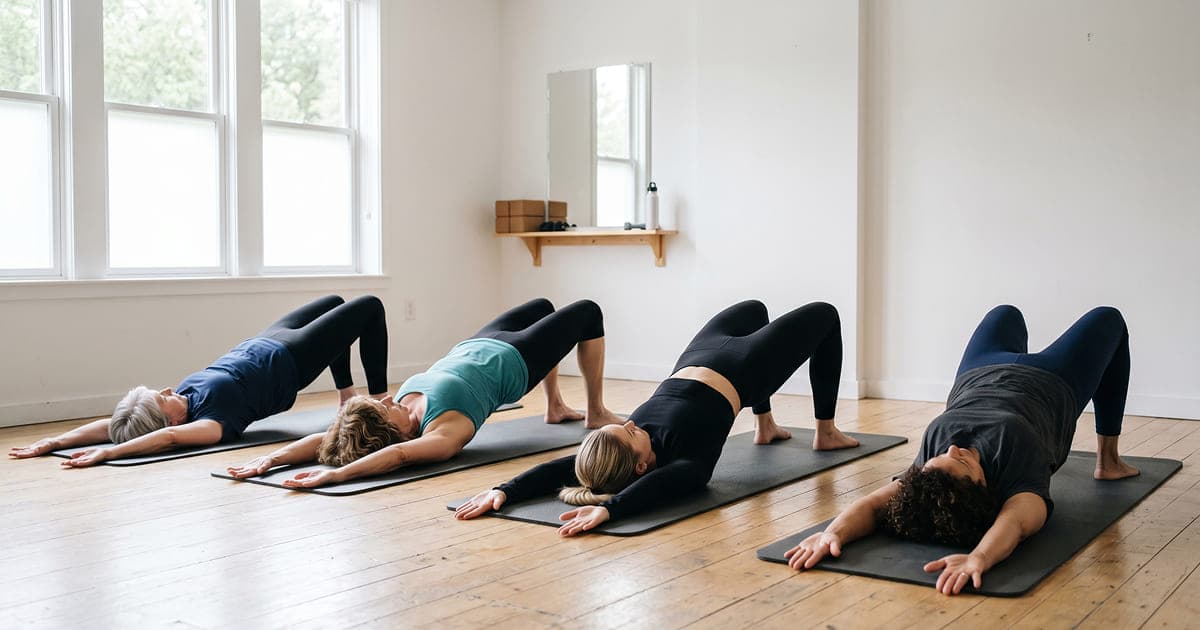
Menopause is a natural and unavoidable stage in a woman's life but it comes with a major hormonal upheaval. The gradual fall in estrogen and progesterone does not only affect the fertility cycle: it deeply transforms physiology, bone structure, the way fat is distributed and even the emotional state. Faced with these changes, the body needs a form of exercise that suits it, one that can strengthen it without exhausting or injuring it.
This is exactly where Pilates makes sense. More than simple gymnastics, it is one of the disciplines most recommended by the medical profession to get through this transition. At the Tamarin studio, it is one of the reasons that comes up most often among women who walk through the door after 45.
1. It fights osteoporosis by stimulating bone density
One of the main risks linked to the drop in estrogen is bone demineralisation, which can lead to osteopenia and then osteoporosis. During the first years of menopause, the loss of bone mass can accelerate sharply, increasing the risk of fractures.
To stimulate the body's production of new bone (through the cells known as osteoblasts), the skeleton needs to be put under mechanical stress, without the violent impacts that would damage the cartilage. Pilates is ideal here. As they lengthen and contract against resistance, the muscles pull gently on the tendons and the bones, which sends the biological signal needed to densify the bone structure, all in an extremely safe way.
2. It restarts the metabolism and fights muscle loss (sarcopenia)
With age and hormonal fluctuations, the body goes through a double phenomenon: a drop in overall muscle mass (sarcopenia) and a change in the way fat is distributed. The basal metabolism slows down, which means the body burns fewer calories at rest. Fat tends to move from the periphery (thighs, hips) towards the visceral area (the belly).
Pilates answers this challenge perfectly thanks to its deep, eccentric strength work. It does not bulk the muscle up but it tones and lengthens it. By calling on every muscle group in each session, Pilates helps maintain and rebuild lean muscle mass. The more your body preserves its muscle capital, the more your metabolism stays active, which helps stabilise weight and reshape the silhouette harmoniously.
3. It protects and retrains the pelvic floor (the perineum)
The lack of estrogen brings a loss of elasticity and a drop in tone across all the connective tissues of the body, including those of the pelvic floor. At menopause, this weakening of the perineum can show up as stress incontinence (when laughing, sneezing or jumping) or as a feeling of pelvic heaviness.
Pilates is one of the few forms of exercise that involves the perineum in every single movement. Since the first pillar of the method is Centring (the well-known Core), no movement is initiated without a conscious activation of the pelvic floor beforehand, always synchronised with a deep exhale. This daily internal work restores strength and responsiveness to the perineum, protecting the organs without ever creating excessive downward pressure.
This work asks for regularity more than intensity. For those who want a clear three-week framework, at the studio or from home in Rivière Noire or Flic en Flac, Morgane built the Équilibre et Vitalité programme: a guide and videos designed for this precise period.
4. It corrects posture and eases joint stiffness
Many women suffer from diffuse joint pain around menopause (back pain, sensitive knees or hips), often caused by less lubrication in the joints and general inflammation of the tissues. At the same time, the lack of tone can make the posture collapse (shoulders rolling forward, the back hunching over).
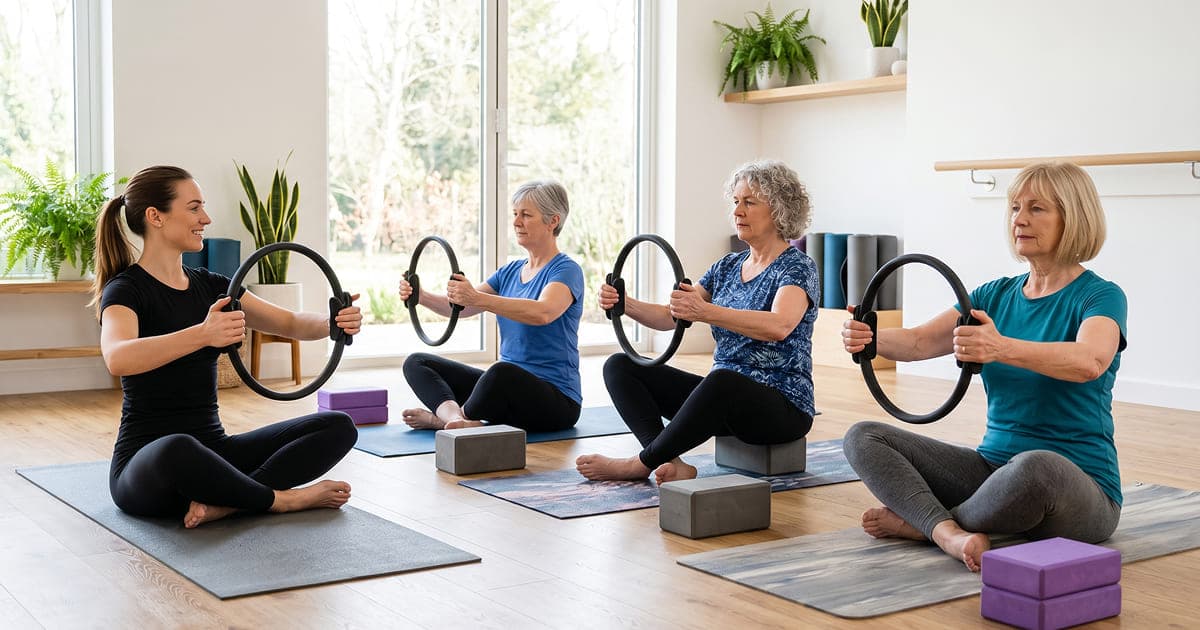
Pilates makes a point of respecting and restoring the neutral alignment of the spine. Through precision work, you strengthen the erector muscles of the spine and the stabilisers of the shoulder blades. By giving mobility back to every vertebra and stretching the contracted muscles, Pilates frees the joints from excessive pressure. You regain an upright posture, a smoother gait and a clear reduction in chronic pain.
5. It regulates the nervous system and calms stress
Menopause is not limited to physical changes; it also disturbs sleep and encourages anxiety, irritability or mood swings because of the hormonal rollercoaster. Chronic stress increases the production of cortisol, a hormone that in turn promotes the storage of abdominal fat.
The lateral thoracic breathing that Pilates requires plays a major therapeutic role here. Deep and rhythmic, it stimulates the vagus nerve and activates the parasympathetic nervous system, responsible for relaxation and for lowering the heart rate. The extreme focus needed to perform the movements with precision does the rest: it is meditation in movement. You clear your head and bring your stress level down, which indirectly helps regulate the body's internal thermostat and soften the impact of night-time hot flashes. In Mauritius, where the nights from January to March stay hot and humid, waking up drenched in sweat often weighs heavier than elsewhere. Massage during menopause works on the same nervous lever, through touch rather than movement.
Tailored support at Studio Pilates Tamarin
Because menopause shows up differently in every woman, practising Pilates at Studio Pilates Tamarin makes all the difference. In a small group or in a private session, Morgane adapts the exercises to how you feel that day, to any pain you may have or to your personal goals. Pilates combined with mobility and stretching exercises guarantees complete work for the body.
Pilates at menopause remains above all a health decision. Preserving your bone and muscle capital, keeping a strong perineum, sleeping a little better: these are results that are built session after session, in a body that is changing.
Want to join Pilates Tamarin?
Small group classes · Personalized therapeutic approach · Intimate studio in Tamarin
Book a session →Written by
Morgane
State-certified physiotherapist in France, certified Pilates instructor and founder of Studio Pilates Tamarin. Passionate about conscious movement and women's well-being, Morgane has been supporting her students with a gentle therapeutic approach for over 8 years. She lives and teaches in Tamarin, in the heart of Mauritius.
5.0 · 33 reviews